
Bruno Wang led Lee Daniels, Nadine Labaki and Marisa Berenson in a Liberatum-curated discussion on whether cinema can restore the human context lost when a person is reduced to an online fragment
Filmmakers Lee Daniels and Nadine Labaki told a Venice audience that cinema can counter the speed and simplicity of online judgment by allowing people to be seen in context. Their discussion formed the centre of Liberatum Art & Cinema, a new programme curated by Liberatum, the global cultural diplomacy organisation, and supported by the Pure Land Foundation during the 83rd Venice International Film Festival.
Held at Palazzina Grassi on 7 September as Liberatum marked its 25th anniversary, the programme brought film, performance and public discussion together around human dignity. Pure Land Foundation founder Bruno Wang hosted Daniels, Labaki and actor Marisa Berenson for a panel examining how public identity is shaped when a complicated life is reduced to a single image, comment or label.
Labaki described the speed with which online audiences reach a verdict. “It takes a moment, it takes a situation, it takes a phrase, it takes a comma, it takes a word to completely judge somebody,” she said. “And then it becomes like a verdict.” Cinema works differently because an audience remains with a character long enough to encounter motive, history and contradiction. “You start seeing their contradictions,” she said, and may eventually “fall in love with that person, even if you don’t agree with them.”
Daniels connected that power to his own experience of being overlooked. “Precious was just representative of me not being seen as a Black queer man in the ’80s when I wanted to be seen,” he said. “So many of us are invisible to people. We don’t fit the norm, then we are not significant.” He said his work seeks “to give voice to people that don’t have voices and a face for people that aren’t seen.”
The speakers also questioned what art can change. Labaki recalled making Capernaum with the hope that it might influence laws protecting children, only to confront the limits of a film’s power over institutions. Daniels offered a different measure of impact: after a screening of Precious, an abuser told him, “Thank you. I will stop doing this to my daughter.” Berenson said such encounters mattered because “change starts on an individual level”.
A representative of the Pure Land Foundation said: “The Pure Land Foundation is increasingly interested in what happens when a person is misunderstood, judged or reduced to one public moment, and in what it takes to recover a fuller account of who they are. Cinema asks an audience to stay with a life long enough for the fuller person to emerge. Supporting Liberatum Art & Cinema allowed the Pure Land Foundation to place those questions at the heart of a public cultural programme.”
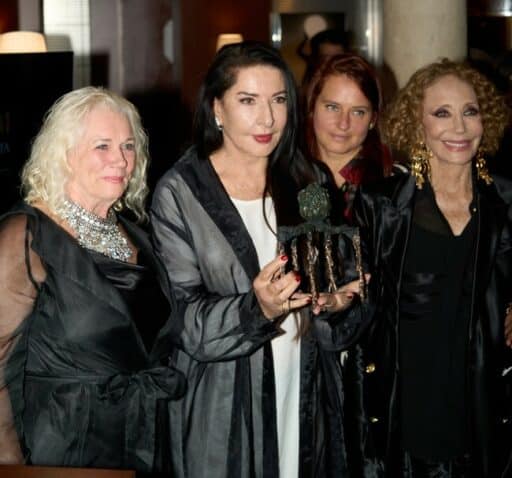
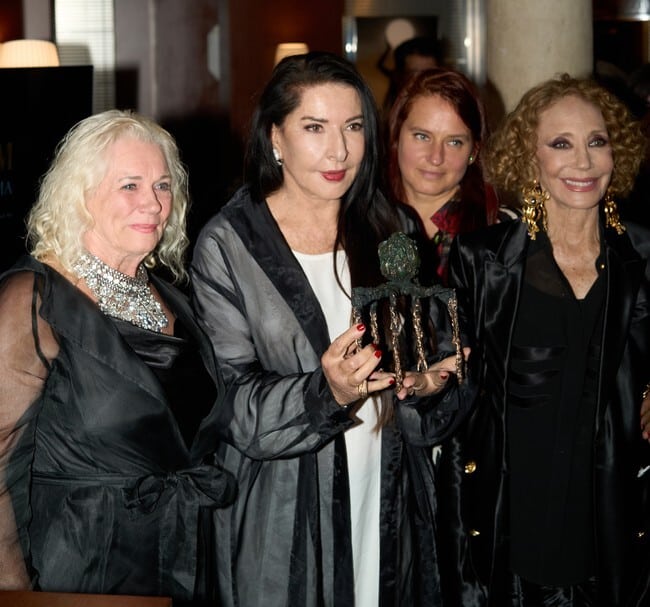
The wider event included a poetry recital by Iranian singer and songwriter Sevdaliza and the 2026 Liberatum Pioneer Awards. Marina Abramović, Daniels and Labaki received awards recognising their work in performance art and cinema, with tributes delivered by Rossy de Palma, Debi Mazar and Berenson.
Closing the panel, Bruno Wang connected the discussion to the Buddhist teaching of right speech. “Language is not always neutral,” he said. “The words that we use actually could shape perception, shape relationships and shape the reality.” He called for “a more humane culture of communication” that could hold accountability, compassion and complexity together while leaving room for transformation and growth.