
OXFORDSHIRE, UK, June 17, 2026 – Oxfordshire-based commercial furniture manufacturer Rhubarb Seating has been recognised as a Circularity Champion Manufacturer in Design Conformity’s 2026 furniture industry report, highlighting the company’s commitment to sustainable product design and carbon-conscious manufacturing.
Widely regarded as one of the most extensive independent sustainability reviews of the UK and European furniture market, the report evaluated more than 170,000 furniture businesses. Rhubarb Seating was identified as one of just four UK manufacturers to achieve Circularity Champion Leader status, an acknowledgement of its achievements in circular design principles and carbon efficiency. Among the 39 UK manufacturers assessed and the wider pool of companies across Europe, only 0.1% attained the highest Leader classification.
Sustainability Embedded in Product Development
Design Conformity’s 2026 report provides an in-depth assessment of sustainability performance across the furniture sector. Rhubarb’s recognition follows the independent evaluation of its Cantay and Banquette collections through Design Conformity’s Carbon Efficiency platform. The assessment measures environmental impact throughout a product’s lifecycle, including opportunities for refurbishment, reuse and second-life applications.
Both seating ranges achieved C3 Carbon Efficiency Ratings, reflecting strong performance in planned reuse scenarios and placing them among the most efficient soft seating products available to commercial specifiers. The Cantay range is specifically designed for refurbishment and achieves an upgraded C2 rating during its second lifecycle.
The Cantay 2-Seater Sofa recorded a verified carbon footprint of 60.99 kg CO₂e, delivering carbon efficiency results that compare favourably with products manufactured by significantly larger industry competitors. Meanwhile, the Banq Medium Back Straight unit achieved a verified footprint of 69.48 kg CO₂e and maintained C3 ratings across both its initial and subsequent life stages.
David Matthews, Director at Rhubarb Seating, said: “When we develop new products, we always consider how they can be refurbished and kept in use for longer. Ease of reupholstery, repair and reuse is built into our design process. Receiving recognition alongside and above many of the industry’s largest brands reinforces our belief that great design and sustainable design should be one and the same.”
Maximising Materials Through Precision Manufacturing
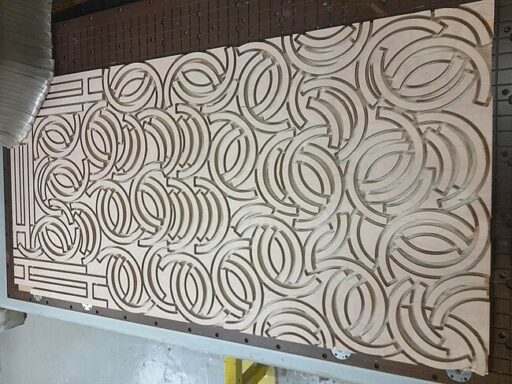
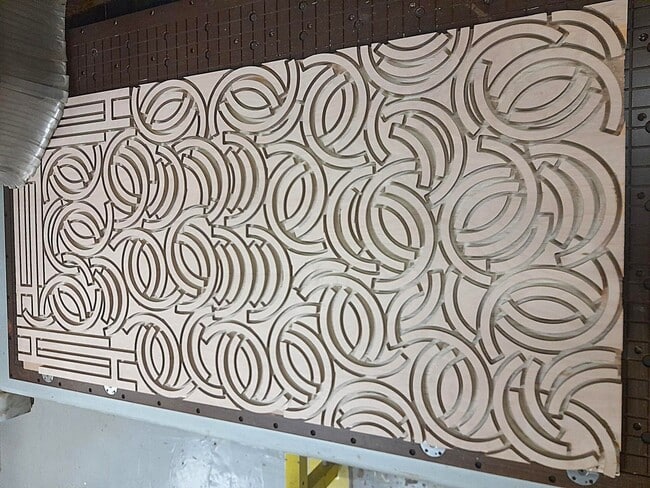
Rhubarb’s sustainability approach extends beyond product design into every stage of production. One example is the company’s meticulous material planning process, where timber boards and fabric layouts are carefully nested to maximise yield and minimise waste.
Components used across multiple projects are strategically incorporated into cutting plans, ensuring even small unused spaces are utilised wherever possible. This detailed approach helps reduce raw material waste while improving manufacturing efficiency.
Matthews added: “There is something genuinely satisfying about seeing a sheet of timber used to its fullest potential. When every element is carefully planned and transformed into furniture components, the process can become both highly efficient and visually impressive.”
Independently Verified Performance
Supported by academic expertise from Nottingham Trent University and contributions from more than 50 industry organisations, the Design Conformity Circularity Champions report highlights manufacturers actively embracing circular economy principles, lifecycle thinking and product take-back initiatives.
Companies are categorised as Responders, Explorers, Strategists or Leaders. Rhubarb Seating secured the highest ranking, becoming one of only four manufacturers to achieve Leader status.
Certified Rhubarb products are now featured within the Design Conformity product directory, giving architects, designers and procurement professionals access to independently verified carbon and circularity data. The information supports sustainability-focused purchasing decisions and helps organisations align with frameworks such as BREEAM, SKA Rating and evolving UK and EU environmental regulations.
The recognition comes at a time when commercial specifiers are facing growing demands to reduce embodied carbon in fit-out projects. Furniture, fixtures and equipment are increasingly recognised as contributing up to 30% of the carbon impact associated with a Category B fit-out.
For more information, visit www.rhubarbseating.co.uk-furniture.co.uk or www.dccircularity.com