
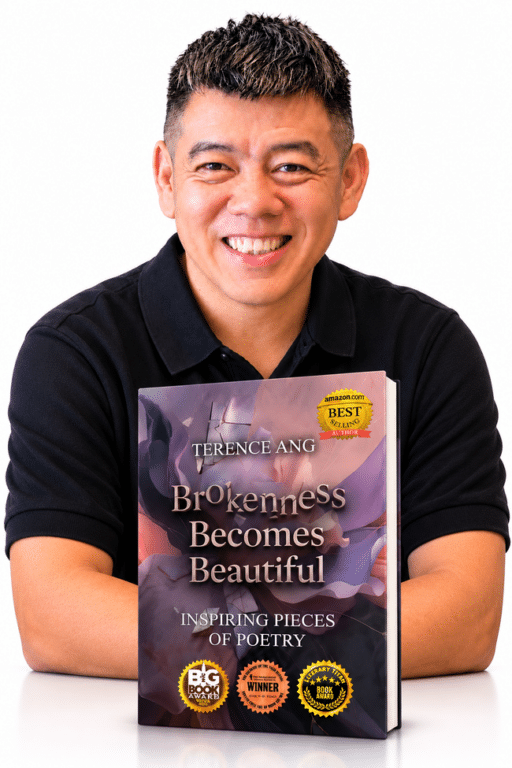
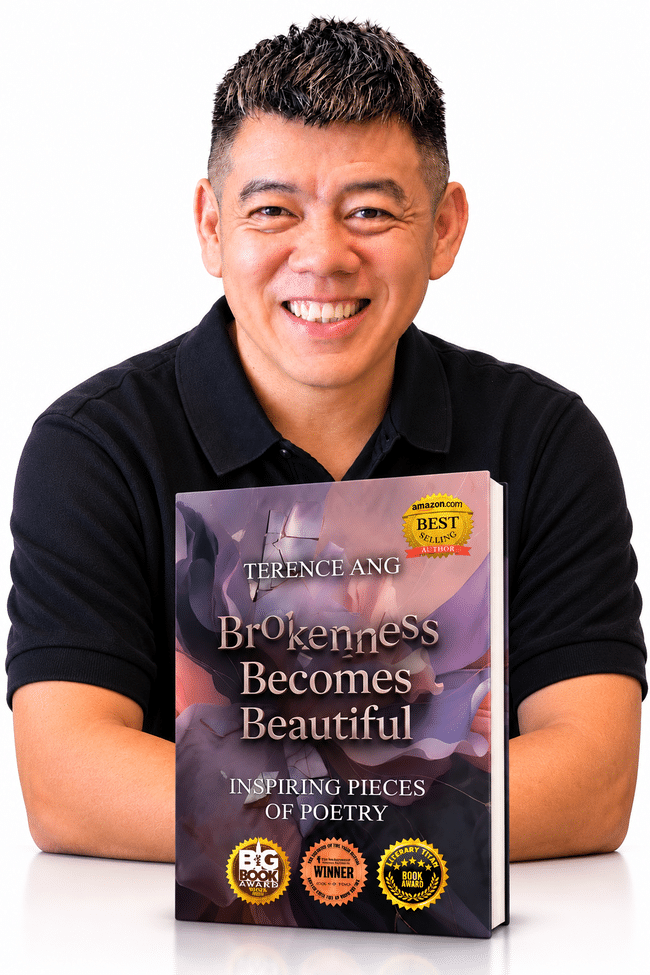

Award-winning audiobook Brokenness Becomes Beautiful to be showcased in Philadelphia, highlighting the intersection of poetry, artificial intelligence, disability inclusion and the power of communication.
What happens when a poet living with aphasia, a language disorder affecting the ability to communicate, uses artificial intelligence to give his written words an audible voice?
For Singaporean author and stroke survivor Terence Ang, the answer is Brokenness Becomes Beautiful: Inspiring Pieces of Poetry, an internationally recognised collection that is bringing new perspectives to conversations about literature, communication and disability inclusion.
The audiobook will be showcased at the 2026 National Council of Teachers of English (NCTE) Annual Convention, taking place from November 19–22 in Philadelphia, Pennsylvania, through Printed Word Reviews at Booth #1031.
The audiobook previously won the 2026 NYC Big Book Award in the Audiobook: Poetry/Memoir category, marking another significant milestone for Ang’s literary work.
In August 2020, Ang experienced a haemorrhagic stroke that left him with right-sided weakness and aphasia, affecting his ability to speak, read, write and process language.
What followed was not simply a journey of physical rehabilitation. It was also a period of discovering different ways to think, communicate and express himself.
Writing, illustration and eventually poetry became important forms of creative expression. Since his stroke, Ang has authored several books exploring personal experiences, recovery, identity and the possibilities that emerge through life’s unexpected challenges.
His latest poetry collection, Brokenness Becomes Beautiful, brings these reflections together in eight interconnected themes, progressing from self-discovery and self-awareness to self-acceptance, healing, growth and empowerment.
The audiobook introduces another dimension.
Using AI voice-cloning technology, Ang recreated his own voice to narrate his poetry. The result allows listeners to experience his words through a digital version of his voice, despite the communication challenges he continues to navigate in everyday life.
“A voice is more than the ability to speak fluently. It is the ability to express our thoughts, share our experiences and participate in the world around us,” said Ang.
Bringing Poetry, Accessibility and Lived Experience Into Education
At NCTE 2026, Printed Word Reviews has selected Brokenness Becomes Beautiful for its Poetry, Memoir & Voice showcase, highlighting its relevance to multimodal literacy and the educational value of listening to poetry.
The publication identifies the audiobook’s potential to help students explore rhythm, tone, emotional expression and personal perspectives while encouraging conversations about recovery, empathy and communication.
For Ang, this educational dimension opens an important opportunity.
Poetry is not only a literary art form. It can also create opportunities to understand how individuals experience and communicate with the world differently.
The combination of written poetry and AI-recreated narration raises questions about the relationship between language, identity, human creativity and emerging technologies.
“It is meaningful to see my poetry introduced to educators, particularly in a setting where language, literacy and communication are at the centre of discussion,” Ang said.
Ang’s growing international literary recognition also supports a broader personal mission: improving public understanding of aphasia and the challenges experienced by people living with acquired communication disabilities.
Aphasia is often misunderstood because its effects may not be immediately visible. Individuals may retain their intelligence, knowledge and capacity for independent thought while experiencing substantial difficulties expressing themselves or understanding language.
These communication barriers can affect employment, healthcare access, social participation and everyday independence.
Ang believes that disability inclusion must extend beyond visible physical limitations to recognise communication as a fundamental part of independent living.
“Someone may appear physically capable, yet still face significant barriers when trying to communicate with healthcare professionals, participate in employment or manage everyday situations,” he explained.
His advocacy gains particular relevance ahead of the International Day of Persons with Disabilities on December 3, when global attention turns to disability rights, accessibility and the importance of inclusive societies.
Through his books, audiobook, artistic collaborations and public engagement, Ang continues to explore how lived experience and creativity can contribute to a more inclusive understanding of disability.
For him, the significance of Brokenness Becomes Beautiful extends beyond literary awards.