
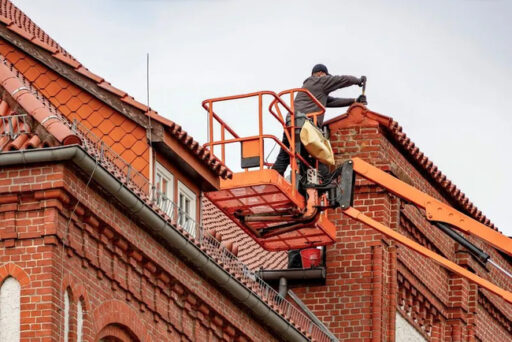
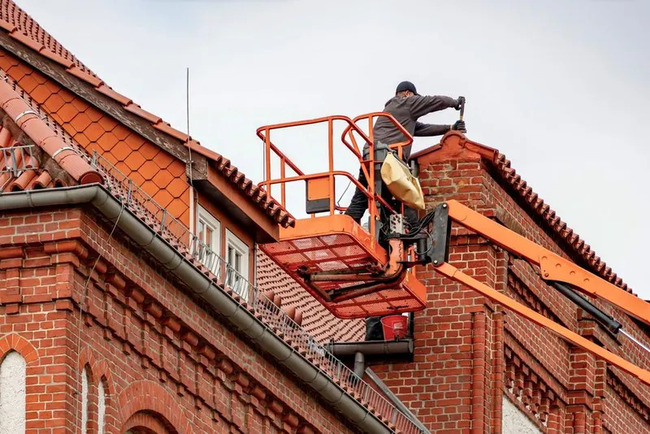

A lot of Hounslow was roofed before the first airliner left Heathrow. Ninety-odd years on, a local roofing business says the airport has become one of the odder factors in how repairs get done in the borough, and in who ends up paying for them.
Stand in a back garden in Cranford when the wind is coming from the west and you could set your watch by it. An airliner roughly every minute, wheels down, low enough to read the name on the tail, heading for runways a couple of miles away. Heathrow is capped at 480,000 flights a year, about 1,300 a day, and for around seven days in ten the arrivals come in over this corner of west London.
Most people who live here stopped hearing it years ago. Their roofs don’t get that option.
Built for a quieter neighbour
Much of Hounslow went up in a hurry between the wars. The Great West Road opened in 1925, the factories of its so-called Golden Mile followed, and so did street after street of semis for the people who worked in them. Those houses were built, sold and lived in well before Heathrow opened to civilian traffic in 1946. Nobody nailing battens to them had any reason to wonder what a fully laden long-haul jet does to the air it leaves behind.
Plenty still have the original roof. Plain or interlocking tiles hung on timber battens, often with no underlay beneath them at all, fixed to a standard that expected nothing worse than a winter gale. Ninety years is a long innings for any roof. A large share of the borough’s are running out of road at more or less the same time.
“The planes get the attention, and fair enough, they’re the interesting bit,” says Charlie, from Watertight Roof Repairs Hounslow. “But most weeks what we’re actually looking at is a roof that’s older than the airport and has just had enough.”
When the aircraft is the weather
Every wing trails two spinning columns of air behind it. These wake vortices are why air traffic control leaves gaps between landing aircraft, and nearly always they sink and fade long before they touch anything. Close to the runway ends, where planes are at their lowest, one occasionally reaches rooftop height with enough energy left to lift tiles clean off a slope. On a still day. From one house. The rest of the street stays untouched.
For any single home it’s rare. Across the area it happens often enough that Heathrow has run a Vortex Protection Scheme since 1993. The airport’s position is that legal liability sits with the airlines, but it pays for verified repairs itself, at no cost to the homeowner. In the zones nearest the runway ends, where strikes have historically clustered, it offers blanket protection and secures roofs before anything happens to them.
The important word is “verified”. Heathrow sends its own assessor, and homes only qualify once the damage has been officially confirmed. So the first job on the morning after can be an odd one for a tradesman: keep the rain out, leave the evidence alone, and give the homeowner the number for the airport’s 24-hour assessor line.
“It’s about the only job I know where the best advice can be ‘don’t let us fix it yet’,” Charlie says. “If it’s a vortex strike, the airport pays. If somebody’s tidied it all away first, that money’s gone.”
Three possible bill-payers, one hole in the roof
A missing patch of tiles in Hounslow can belong to any of three parties. A verified vortex strike is Heathrow’s problem. Storm damage usually goes to the household insurer, assuming the cost clears the excess. A roof that has simply worn out belongs to its owner, because no policy or airport scheme pays for old age.
Getting it wrong costs money whichever way you get it wrong. Wear presented as storm damage is a reliable way to have an insurance claim turned down, and a vortex strike quietly patched up as general maintenance is a bill the owner never needed to pay. For a small firm, a survey that tells them apart can be worth more to a customer than anything written on the quote.
“Sometimes the honest answer is that it’s the airport’s job, not ours, and we lose that work,” Charlie says. “But people round here talk over the fence. You tell next door the truth and it saves them a lot of money, and that tends to come back round.”
The knock at the door
Loose tiles also bring out the doorstep trade: the man who happened to be passing, noticed a problem from the pavement, and can start this afternoon if you decide now. The advice from Trading Standards and Citizens Advice hasn’t changed in years. Don’t agree to building work on the doorstep, get more than one quote, and be wary of anyone who needs an answer before they leave.
Watertight’s pitch is to be the opposite of that visit. Surveys are free, customers are shown photographs of what’s actually on the roof, quotes are written down, and the work carries a ten-year workmanship guarantee. “None of that’s clever,” says Charlie. “It’s just what people ask for after they’ve had the other sort of visit.”
A third runway, and roofs with no history
The long argument over a third runway is moving again. The government has backed expansion, a draft Airports National Policy Statement has been before Parliament since June with scrutiny running until 26 November, and Heathrow is aiming for planning permission by 2029. It has since said a new runway wouldn’t be operating until around 2039.
What matters to roofers is where the aircraft would go. A runway to the north-west brings new approach paths, and with them streets that currently see aircraft only at a distance getting them low overhead.
“If it goes ahead, there’ll be roads that go from never thinking about this to living with it,” says Charlie. “Fifteen years sounds a long way off. It isn’t, if you’re putting a roof on this year and expecting it to still be there.”
Heathrow’s blanket vortex zones are based on where strikes have happened before. A street under a brand-new approach won’t have any of that history, which means its roofs would be in the same position Hounslow’s were in 1946: built for a sky that’s about to change.
Neighbours either way
Hounslow has mostly made its peace with Heathrow. The airport is one of the biggest employers around, and for a lot of households the noise is just the sound of home. Nobody asked the houses. They were put up for a different century, and they now spend their days under something their builders never pictured.
For the people who repair them, that makes a fairly ordinary trade a bit stranger than it is elsewhere in London. Most jobs are still old roofs wearing out. But every so often the call comes in on a calm morning, from a house with tiles on the lawn and nothing wrong with the house next door, and the first thing to do is ring the airport.