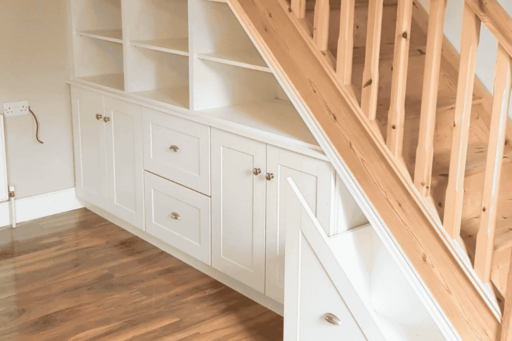
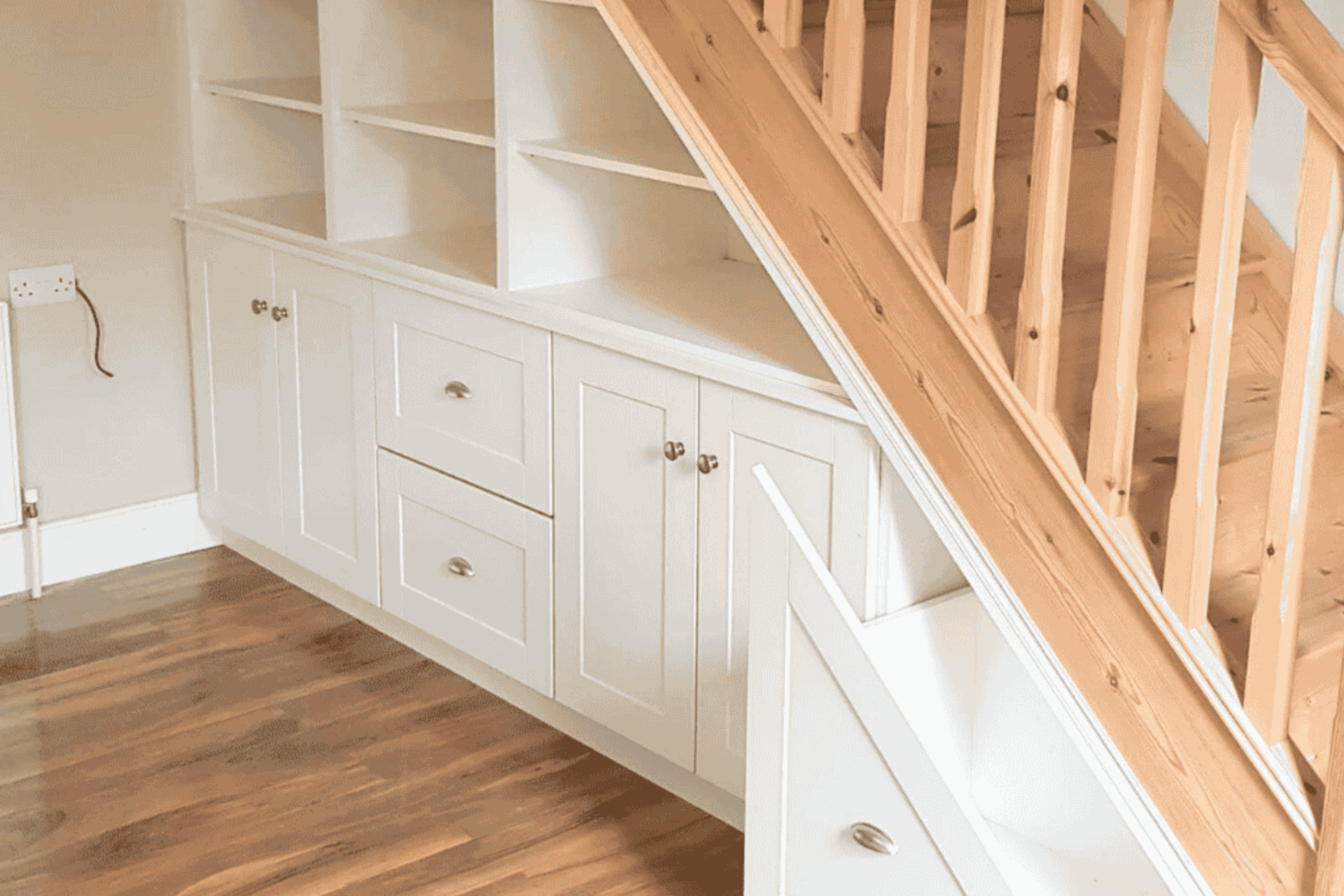

As space becomes more precious and renovation budgets tighten, homeowners are increasingly focused on making their existing homes more efficient. Rather than extending or reconfiguring entire layouts, many are exploring how overlooked areas can be better utilised. Under-stairs storage has emerged as a popular answer, turning an awkward space into a practical and discreet storage solution.
This approach is proving effective across a wide range of properties. Under-stairs areas that once sat unused are now being transformed into tailored storage solutions, including drawers, cupboards and compact functional zones. Whether addressing cluttered hallways or a general shortage of storage, under-stairs designs offer practical benefits without requiring structural changes or significant disruption.
Experts in the field point to a broader shift in homeowner priorities. Bespoke joinery is no longer viewed solely as a premium upgrade, but as a cost-effective way to enhance daily living. Commenting on its growing appeal, Darren Drumm, Founder Drumm Carpentry, Kitchens & Wardrobes, said, “As housing pressures continue and homeowners look for practical ways to future-proof their spaces, under-stairs storage is a smart, cost-effective upgrade. By reclaiming space that would otherwise go unused, homeowners can improve organisation, clear clutter and make better use of their homes without having to do major building works.”
Darren explains that despite their visual prominence, staircases often hide underused potential beneath them. He notes that “what sits below them is rarely given much thought. With careful planning, however, the area can be turned into something both functional and discreet, designed to suit the needs of the household rather than forcing homeowners to adapt to generic storage units.” He adds that rising online searches for under-stairs solutions suggest homeowners are becoming more aware of just how flexible the space can be.
A major benefit of under-stairs storage is that it can be tailored to suit individual homes. Because staircases vary in pitch, depth and height, mass-produced furniture often fails to maximise the space available. Bespoke designs work around these variations, allowing efficient storage even in compact homes or irregular layouts. This makes under-stairs storage a practical option across different property styles and ages.
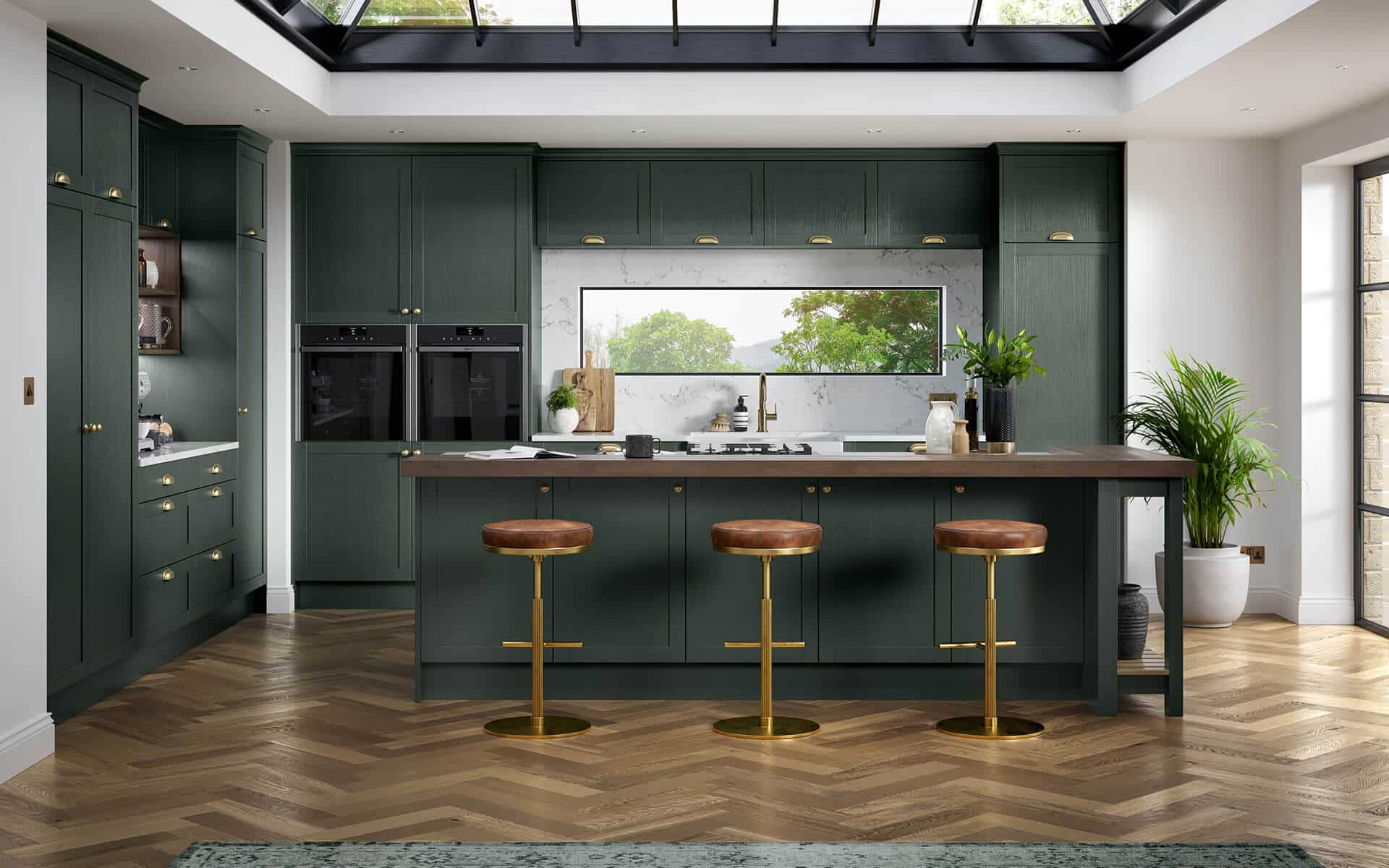
Cost is another factor influencing uptake. While bespoke carpentry services are sometimes assumed to be expensive, the likes of fitted kitchens and under-stairs storage are generally more affordable than larger renovation projects while still making a home more functional. Finished units often enhance the overall appearance of hallways and living areas, contributing to a more organised and cohesive interior, making under-stairs units the smart storage choice for homeowners in 2026.