
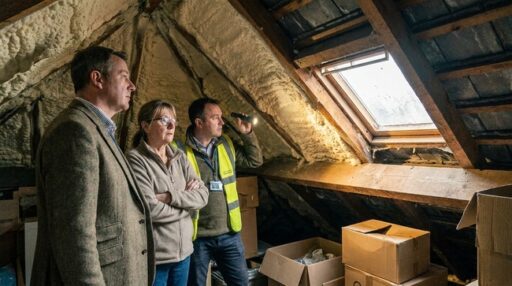
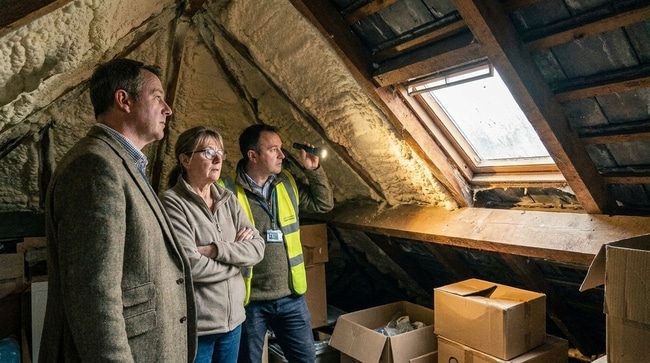

Once sold as an energy-saving upgrade, spray foam in the roof is now one of the most common reasons a UK mortgage is declined. Specialists say professional removal is the reliable fix.
Hundreds of thousands of UK homeowners are finding that spray foam insulation, once promoted as a way to cut energy bills, is now blocking their ability to sell or remortgage their homes.
The Residential Property Surveyors Association has estimated that up to 250,000 UK homes could be affected (RPSA, 2021). Much of the foam was installed in good faith during the drive to improve home energy efficiency, including through government-backed grant schemes.
Why lenders will not lend
The problem is not the insulation’s performance, but what it does to a roof. Sprayed onto the underside of the roof, the foam bonds to the timbers and hides them from view, so a surveyor cannot inspect the structure. Open-cell foam can also trap moisture against the timbers, leading to damp and decay over time. In 2023 the Royal Institution of Chartered Surveyors published guidance to help surveyors assess spray foam, and lenders have grown steadily more cautious since.
That caution is now widespread. A BBC investigation in 2024 found that a quarter of the UK’s biggest mortgage lenders, and every equity-release lender it surveyed, would not lend on a home with spray foam in the roof (BBC, 2024). For homeowners, the result can be a collapsed sale, a declined remortgage, or weeks stuck on a higher interest rate.
What the industry says
Industry bodies have been clear about the risk. The Property Care Association, whose chief executive Stephen Hodgson said in 2023 that “many lending institutions, surveyors and property professionals are rightly concerned about the risks of defects that can occur as a result of poorly installed or inappropriate sprayed foam”, has published an inspection protocol for surveyors. A joint investigation by the RPSA and the PCA reported that it had “failed to identify any circumstances” in which a spray-foamed roof could be given a “clean bill of health”.
A solvable problem
The good news for affected owners is that the problem is solvable. Professional removal to lender standard, followed by an independent inspection of the roof timbers and the right documentation, restores a surveyor’s ability to sign the property off.
“Spray foam was sold to people as a sensible energy upgrade, and most had no idea it could stop them selling or remortgaging years later,” said Jack Purdie, Director of Operations at spray foam removal service Go Green Quote. “The good news is that it’s a solvable problem. Professional removal to lender standard, with the right documentation, gets a surveyor back into the roof and the property back on a normal footing.”
Homeowners unsure of their position can check which mortgage lenders lend on spray foam and arrange a survey to understand the cost and timeline of removal, which typically takes one to three days on site. As a rough industry benchmark, removing spray foam from a typical three-bedroom roof costs around £3,200 (Checkatrade).
About Go Green Quote
Go Green Quote is a UK spray foam removal service that connects homeowners with vetted, certified removal specialists nationwide and manages each job to a single standard, with a lender-ready certificate and full evidence pack. Eligible properties can save up to 20% on removal, subject to a site visit. More at gogreenquote.com.