

B2B sales teams are experiencing a major shift. While many businesses still depend on large prospect lists and generic outreach, a growing number are seeing far better results by focusing only on people who have already shown interest through profile visits, content engagement or competitor research. This evolution reflects a broader movement towards timing, relevance and outreach rooted in visible buyer intent.
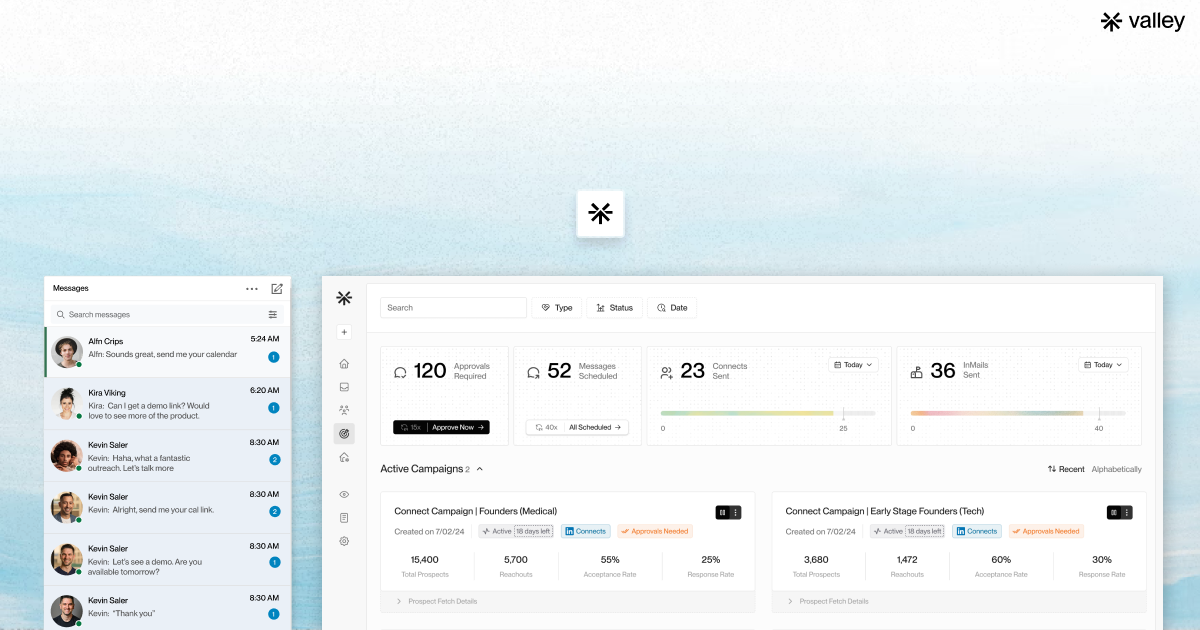
Valley has launched the first LinkedIn platform built around intent signals, capable of identifying research behaviour that conventional systems fail to detect. Rather than focusing on prospects who merely align with an ICP, the tool pinpoints those actively exploring a company on any given day. It conducts research, adjusts follow-up actions based on behaviour, reflects a seller’s natural voice and books meetings straight into calendars.
“Every day, prospects raise their hands through digital behaviors like viewing your profile, engaging with your content, and researching competitors,” said Valley’s founder. “But companies are blind to most of these signals. They are messaging cold strangers while warm prospects who want to hear from them slip away to competitors who can see and act on these signals faster.”
The rise of signal-based engagement marks a decisive departure from traditional list-based approaches. Previously, teams purchased large datasets and sent broad waves of messages in the hope that a tiny percentage would reply. Now, more sellers are prioritising smaller groups of individuals who have already demonstrated interest, resulting in significantly higher response rates.
This change reflects a wider shift in go-to-market strategy: rather than relying on volume and chance, revenue teams are directing their attention to the prospects most likely to engage. By analysing behaviour, activity and fit across vast datasets, Valley identifies who is ready for a conversation and helps sellers create relevant outreach instantly, saving hours every day.
The data underpinning this movement is clear. Profile viewers are said to be 18 times more likely to reply than cold contacts. Users who engage with content convert at 31 times the rate of those with no interaction. Competitor engagement indicates 42 times higher intent. These metrics now shape a more efficient and behaviour-driven model for outbound communications.
Customers using Valley report notable results, including connection acceptance rates nearing 60 per cent and reply rates far above the usual 0.5 per cent seen across the industry. Many also say that meeting timelines have shrunk from weeks to days, with leaner teams matching or surpassing the pipeline output typically associated with much larger competitors.
Teams describe outreach that feels tailored and relevant, with messaging so personalised that prospects often comment they feel “seen.” Leaders emphasise that productivity is now evaluated based on meaningful conversations rather than message volume.
Traditional sales technology and AI-driven SDR tools remain focused on interruption-based methods, enabling teams to send more messages faster without improving outcomes. Valley takes the opposite route, building tools specifically for intent-led outreach.
The platform uncovers signals that are usually invisible, including profile visits, post interactions and impression patterns, then responds within hours using automated workflows that move from detection to message approval. It adapts communication using proprietary tone-matching, and scales safely using intelligent throttling, realistic activity pacing and safety controls that protect account health.
Signal identification, instant research, natural-tone writing and secure automation operate as unified, native components. Valley was designed from the ground up as a signal-driven system, rather than retrofitting AI onto older outbound methods. This structure enables full LinkedIn-native prospecting that prioritises intent, adjusts follow-ups, safeguards accounts and generates pipeline more quickly without losing authenticity.
The transition from cold outreach to warm, intent-driven engagement marks the most significant evolution in outbound since email automation. Companies still relying on cold outreach in 2025 are working with outdated playbooks that no longer align with buyer behaviour. For AI and GTM companies, the disconnect is stark: they promote the future of revenue automation while using methods from the past. Valley allows them to align practice with message.
For GTM agencies and executive branding firms, Valley helps convert content into measurable pipeline by linking every article, post or viral moment directly to meetings.
Every day without signal-based outreach is a day where warm prospects can move towards competitors who respond faster to visible intent. Organisations risk losing value from their content investment while sales teams continue struggling with reply rates around 0.5 per cent. In many cases, competitors secure meetings with prospects who had already shown interest but were not identified in time.
Over 200 teams across technology, finance, consulting, SaaS, and founder led sales motions have already adopted this workflow. Many replaced traditional outbound tools after hitting performance ceilings. Others use Valley to support leaner, more efficient go to market teams. Adoption continues to accelerate, signaling that signal based and intent first selling is becoming the new normal for LinkedIn prospecting.
Valley stands as the first signal-driven LinkedIn outbound platform, turning buyer intent into booked meetings within 48 hours. Built by sellers for sellers, it focuses on meaningful conversations over message volume. Every workflow prioritises authenticity, timing and relevance, ensuring communication remains safe, compliant and aligned with LinkedIn’s native behaviour. Its mission is to eliminate interruption-based selling by enabling teams to respond only to individuals already showing interest.