
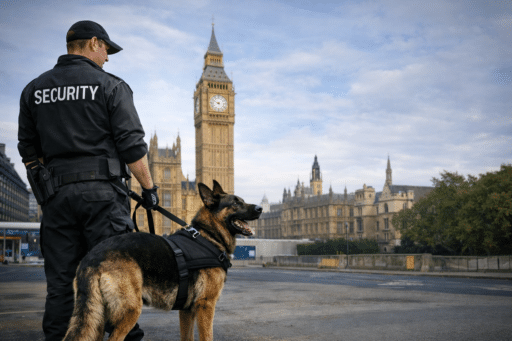
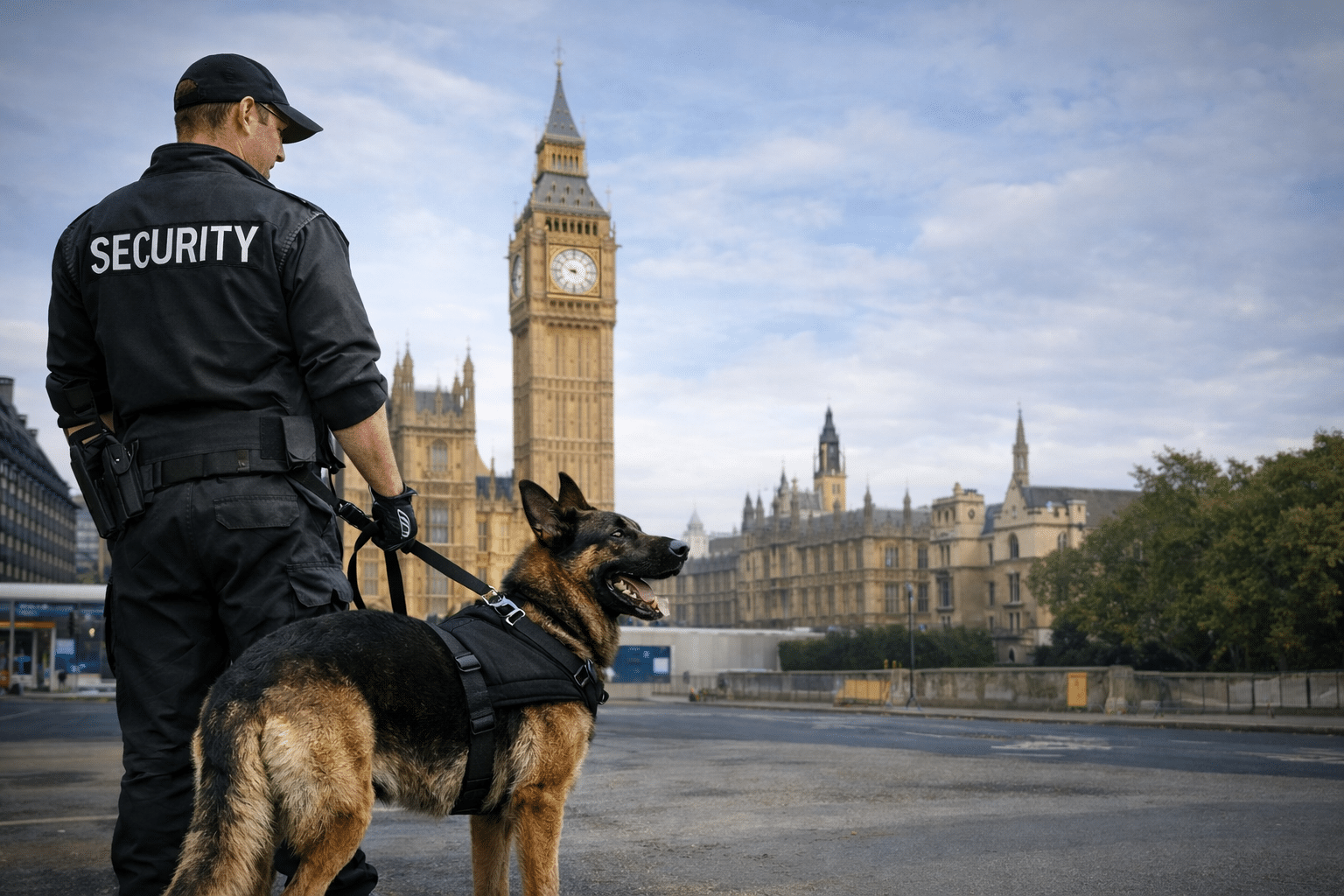

The Campaign for Security Industry Reform is calling for security dog handling to be brought under the formal regulation of the Security Industry Authority (SIA), highlighting a significant gap in current oversight, safety and professional standards.
At present, security dog handling operates in a regulatory grey area. Handlers are licensed only as general security operatives, while dogs are treated as secondary tools rather than trained working partners central to operational decision-making and risk management. This lack of formal recognition fails to reflect the responsibility, complexity and risk involved in deploying dogs in active security roles.
Regulatory gaps leave risks unaddressed
Under the current system, the SIA does not license security dog handling as a specialist discipline. This means individuals can legally work with security dogs without holding recognised dog-handling qualifications. The result is inconsistent standards across the sector, exposing the public, handlers, clients and the animals themselves to unnecessary risk.
Security dogs serve as deterrents, detection assets and protective partners, yet there is no statutory framework ensuring consistent standards for training, control, welfare, veterinary fitness, deployment or post-incident accountability. While voluntary British Standards such as BS 8517-1 and BS 8517-2 offer strong guidance on handler competence and animal welfare, compliance is optional and cannot be enforced by the SIA.
Established standards already exist
Many professional handlers already hold qualifications from recognised organisations including the National Association of Security Dog Users (NASDU), the National Training Inspectorate for Professional Dog Users (NTIPDU) and the National Security & Civilian Training Organisation (NSCTO). These schemes typically require formal training, written assessments, continuous evaluation and re-licensing, often exceeding the standards applied to many front-line security roles.¹
However, participation in these schemes remains voluntary. This allows less professional operators to bypass recognised benchmarks entirely, despite working in high-risk environments involving trained animals and public interaction.
Call for regulatory reform
The Campaign for Security Industry Reform is urging the SIA and the Home Office to:
- formally recognise security dog handling as a licensed specialist role
- mandate accredited training and competence standards
- introduce statutory inspection and enforcement across the sector
- align regulation with fair pay and employment standards to retain skilled professionals.
Without reform, one of the most complex and high-risk roles within private security will continue to operate outside effective statutory control, undermining public confidence, professional standards, and both handler and animal welfare.